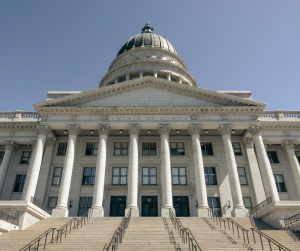
As The People’s House, we are committed to ensuring an efficient and responsive government for Utahns by maintaining transparency and keeping all branches of state government and agencies accountable.
In recent years, lawmakers have expanded public access to government data and court records, cut taxes,maximized the return on investment for taxpayer dollars, and taken other steps to strengthen accountability to the people of Utah.
In addition, the Legislature has worked to streamline government operations to reduce inefficiencies and ensure agencies are focused on delivering results for Utahns. These efforts help ensure that state government remains responsive, responsible, and aligned with the priorities of Utah families.
Funding Highlights
In 2026, the Legislature reduced state spending in unnecessary and outdated programs by $298.9 million and reallocated the savings to higher priority programs while cutting Utahns’ taxes for the 6th year in a row
Past Legislation
HB 265
2026
Higher Education Strategic Reinvestment
Directed state colleges and universities to cut a combined $60 million ongoing from administrative costs and underperforming programs and reinvest the savings to expand and support high-demand, high-impact student opportunities and research
HB 540
2026
Judicial Transparency and Information Access Amendments
Established a single public website where Utahns can access court records free of charge, up to 50 searches per month and required judges and court commissioners to file annual financial and conflict-of-interest disclosures — the same standard that already applied to every other public official in Utah
SB 134
2026
Court Amendments
Added significant judicial capacity to address a backlog that has left major cases unresolved for years and ensures Utah’s courts can keep pace as one of the fastest-growing states in the nation
HB 392
2026
District Court Amendments
Created a panel of three district court judges — randomly selected from different judicial districts across the state — to hear cases that involve constitutional challenges to state law
HB 274
2026
Sentencing Amendments
Increased the number of prosecutors and law enforcement officers serving on Utah’s Sentencing Commission, giving the criminal justice community a stronger voice in sentencing guidelines to prioritize public safety
SB 270
2026
State Court Amendments
Allowed the Judicial Council to establish a specialized district court division for housing and debt collection cases and moved these cases to virtual hearings to improve efficiency and expand access to justice for low-income Utahns facing eviction or debt proceedings
HB 147
2026
Government Form Submission Amendments
Required all government forms to include an online sign and submission option to cut red tape and make it easier for Utahns to complete necessary paperwork
SB 233
2026
Judicial Performance Evaluation Amendments
Established statutory timeliness standards for appellate judges and Supreme Court justices
HB 380
2025
Presumption of State Jurisdiction Amendments
Clarifies that the U.S. Constitution gives the federal government limited powers, while states have general jurisdiction
SB 57
2024
Utah Constitutional Sovereignty Act
Established a framework to prohibit state government officers from enforcing a federal directive that violates the principles of the 10th amendment