The Utah House Majority passed crucial reforms to the state’s judiciary during the 2026 General Session – expanding court resources, opening court records to the public, addressing forum shopping, and holding judges to common sense accountability standards.
Why Utah's Judiciary Needed Reform
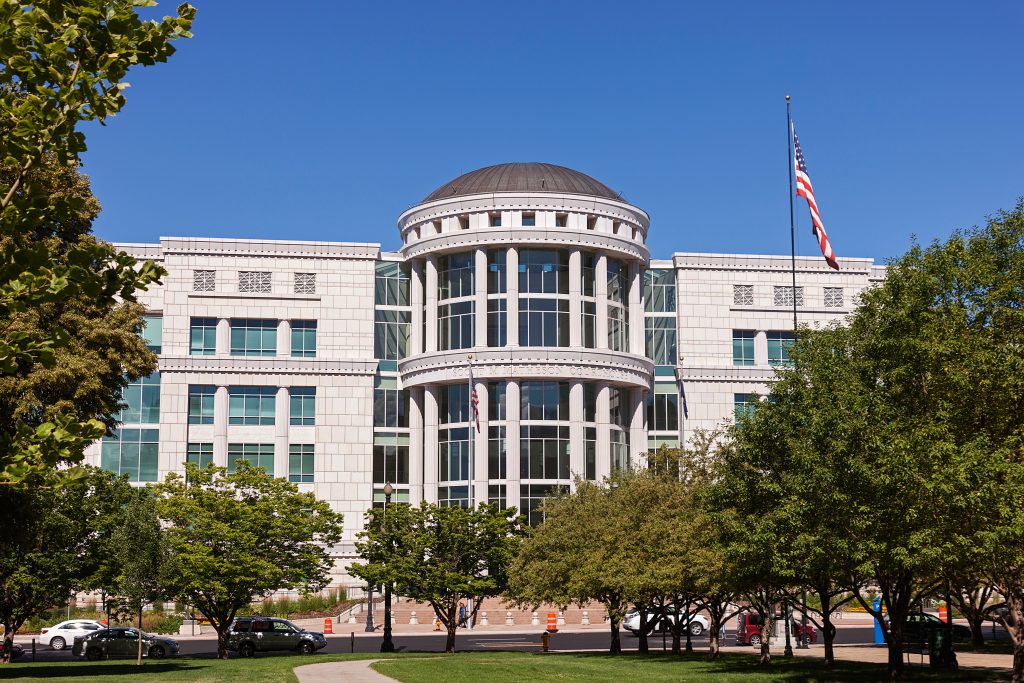
Every two years, Utahns vote on whether to retain the judges on their ballot. But many voters say they don’t have enough information to make informed decisions. And it’s a structural problem. Unlike the Legislature, where every vote and every committee hearing is recorded and is publicly available online, the courts operate largely out of public view. Court records are hard to find, judges aren’t required to make financial disclosures, and a single judge can make decisions that have consequences all across the state.
The data bears this out. A 2025 report by Fix the Court, a nonpartisan judicial accountability organization, highlighted Utah and Idaho as the only two states in the nation with no annual financial disclosure requirement for their judges and justices. While 24 states post judicial disclosures online and federal judges file detailed annual reports covering investments, outside income, gifts, and reimbursements, Utah’s courts operated with no equivalent requirement at all – leaving voters with no way to know whether a judge ruling on a case had a financial stake in the outcome.
“The judicial branch is the least transparent branch of government that we have in the state,” said House Speaker Mike Schultz. “Go and try and find any information or decisions made by courts. It’s almost impossible.”
The 2026 General Session changed that.
Utah Judicial Reform Bills Passed by the Utah Legislature
Expanding the Bench to Handle a Growing State
Utah has over 3.5 million residents. But it has the same number of Supreme Court justices it had when the state had 300,000 people. And in the meantime, legal cases have only become more complex.
The Legislature passed SB 134, adding significant judicial capacity to address a backlog that has left major cases — including decisions on the state’s abortion law and education spending — unresolved for years. The bill, carried by Sen. Chris Wilson and Rep. Casey Snider, includes:
- 2 new Utah Supreme Court justices
- 2 new Court of Appeals judges
- 3 new district court judge
- 9 law clerks and 7 judicial assistants
The total investment is $6.5 million, a commitment to making sure Utah’s courts can keep pace with one of the fastest-growing states in the nation.
Utahns broadly supported the expansion. A Deseret News/Hinckley Institute of Politics poll conducted by Morning Consult found that a majority of registered Utah voters – 58% – supported adding two justices to the Supreme Court.
Making Court Records Public and Free
HB 540 establishes a single public website where Utahns can access court records free of charge, up to 50 searches per month.
For voters who want to research a judge’s record before an election, this is a game-changer. For the first time, public court records will be genuinely public: searchable, accessible, and free.
The bill, carried by Rep. Logan Monson and Sen. Brady Brammer, also requires judges and court commissioners to file annual financial and conflict-of-interest disclosures, the same standard already applied to every other public official in Utah. And it prompted the Utah Supreme Court to adopt a new rule prohibiting appellate judges and justices from appearing before the court they served on for two years after retirement, closing a long-standing conflict-of-interest loophole.
Ending Forum Shopping with Three-Judge Panels
Under the old system, plaintiffs filing controversial constitutional challenges could strategically file their case in the 3rd District – hoping to draw a favorable judge. One judge, in one district, could effectively make statewide law.
HB 392, subsequently amended by HB 366, fixes this. The legislation, carried by Rep. Matt MacPherson and Sen. McKell, ensures that when a case involves a constitutional challenge to state law, a panel of three district court judges – randomly selected from different judicial districts – hears the case together. No more single-judge statewide rulings. No more forum shopping.
Voters support the change. A March 2026 Deseret News/Hinckley Institute of Politics poll of 800 registered Utah voters found that 50% support the new three-judge constitutional court – with opposition in the single digits among those who strongly oppose it.
Strengthening the Sentencing Commission
HB 274 increases the number of prosecutors and law enforcement officers serving on Utah’s Sentencing Commission. The bill, sponsored by Speaker Mike Schultz and Sen. Mike McKell, gives the criminal justice community a stronger voice in how sentencing guidelines are shaped and also prompted the commission to revise its jail-as-probation recommendations for serious criminal offenses.
A New Housing and Debt Collections Division
SB 270 allows the Judicial Council to establish a specialized district court division for housing and debt collection cases. The bill, carried by Sen. Kirk Cullimore and Rep. Jordan Teuscher, moves these cases to virtual hearings to improve efficiency and expand access to justice for low-income Utahns facing eviction or debt proceedings.
Timeliness Standards for Appellate Courts
SB 233 establishes statutory timeliness standards for appellate judges and Supreme Court justices – a direct response to cases that have sat unresolved for years. The bill, carried by Sen. Brady Brammer and Rep. Karianne Lisonbee, also directs the Judicial Performance Evaluation Commission (JPEC) to study whether the number of times a judge is overturned on appeal for abuse of discretion should factor into performance evaluations.
Holding a Judge Accountable
HR 8 censured District Court Judge Don Torgerson for comments made from the bench that minimized child sexual abuse and repeatedly referenced a defendant’s privilege during sentencing. The resolution, brought by Rep. Matt MacPherson, represents a rare but necessary exercise of legislative accountability over the judicial branch.
What Utah’s Judicial Reforms Mean for Utahns
These reforms address a set of problems that have been building for years.
- Voters will now have access to free, searchable court records when evaluating judges on their ballot.
- Litigants will face faster, more balanced decisions through expanded court capacity and three-judge panels.
- Taxpayers get a judiciary that operates under the same conflict-of-interest standards as every other public official.
- Communities benefit from a Sentencing Commission better aligned with the realities of criminal justice.
The Utah House Majority committed before session to making the judiciary more accountable and transparent. These seven bills delivered on that commitment.
Frequently Asked Questions About Utah's Judicial Reforms
How can Utahns now access court records?
Under HB 540, a new public website will provide free access to all public court records, up to 50 searches per month. No account, no fee, no request process, just searchable public records.
Why did Utah add more judges?
Utah’s courts have been operating with the same number of Supreme Court justices since the state’s population was a fraction of its current size. With 3.4 million residents and growing, the backlog of unresolved cases has become a real problem. SB 134 adds judges and support staff to bring capacity in line with demand.
What is forum shopping, and how did HB 392 stop it?
Forum shopping is the practice of filing a lawsuit in a specific court – or before a specific judge – where the plaintiff believes they’re most likely to win. Under HB 392, constitutional challenges to state law are now heard by a randomly assembled panel of three judges from different districts, eliminating the ability to hand-pick a favorable venue.
Are Utah judges now required to disclose financial conflicts of interest?
Yes. HB 540 directs the Judicial Council to establish rules requiring judges and court commissioners to file annual financial and conflict-of-interest disclosures — consistent with the standards applied to legislators and other public officials.
What did the censure of Judge Torgerson involve?
HR 8 censured Judge Torgerson for remarks made from the bench that minimized child sexual abuse and repeatedly referenced a defendant’s privilege during sentencing. The censure is a formal rebuke from the Legislature and part of a broader commitment to judicial accountability.
For more on the Utah House Majority’s 2026 session priorities, visit the House Majority website. To read the official bill text, visit le.utah.gov.