Across the country, higher education is facing a reckoning with declining enrollment, rising costs, and a 2025 Gallup survey showing only 42% of Americans trust their colleges and universities. But the future of higher ed is much brighter in Utah. A Deseret News/Hinckley Institute of Politics poll in March 2026 found that 67% have confidence in the state’s colleges and universities. Nearly 63% of Utahns ages 25-64 hold a postsecondary degree, certificate, or certification, nearly 10 percentage points above the national average.
Over four consecutive legislative sessions, the Utah House Majority has worked alongside university presidents, the Commissioner of Higher Education, the Senate, and the governor to make the state’s system of higher education even stronger. The results are measurable, and Utah is building a model the nation should watch.
What Is Utah's Higher Education Strategic Reinvestment – And Why Did It Happen?
In 2025, the Utah Legislature passed HB 265, carried by Rep. Karen Peterson and Sen. Ann Millner, which required Utah’s eight degree-granting public colleges and universities to identify $60 million in existing budgets – drawn from administrative costs and underperforming programs – and redeploy those dollars into high-demand programs aligned with student outcomes and Utah’s workforce needs.
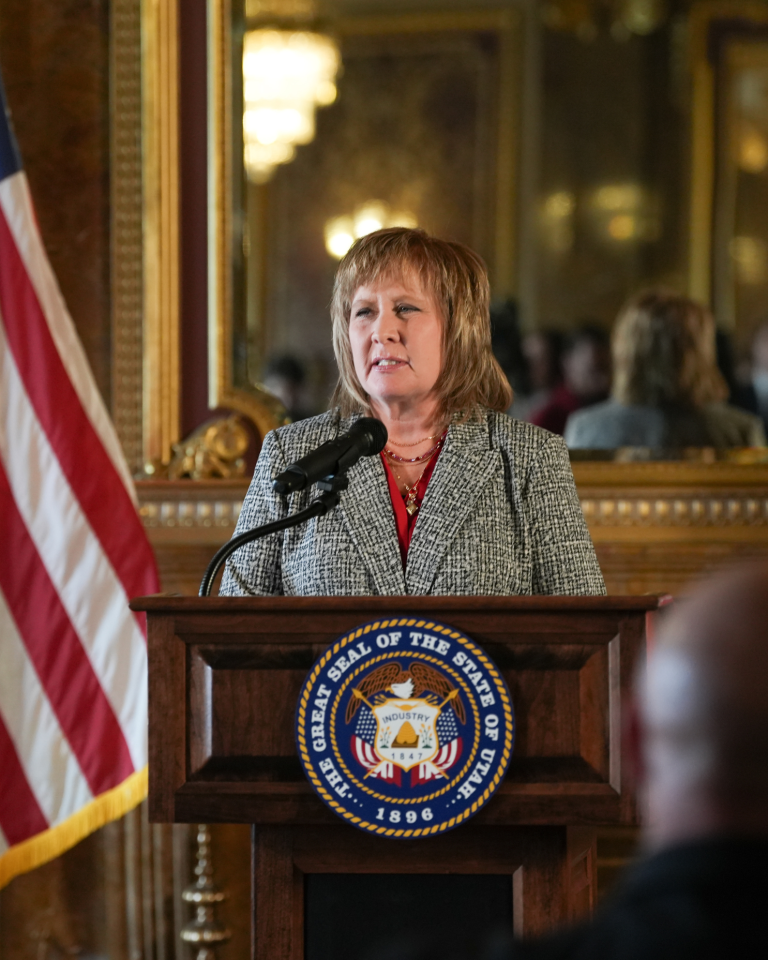
The Legislature’s premise was straightforward: public dollars should work hard for students and taxpayers, not sustain programs with low enrollment and limited career prospects. “HB 265 created a fundamental shift in how our colleges and universities operate,” Rep. Karen Peterson said. “More than 85% of reinvested dollars, nearly $52 million, are now flowing directly into classroom instruction and research. That’s a win for Utah students.”
The legislation was deliberately flexible, allowing presidents to craft strategic reinvestment plans that reflect the unique missions and strengths of their institutions. Weber State eliminated course fees, saving students more than $1.5 million annually. Utah Tech will add a net 17 faculty in business, engineering, and mental health. The University of Utah directed reinvested funds toward engineering, artificial intelligence, and biotechnology research. Snow College is expanding rural entrepreneurship, short-term credentialing, and prison education. Across the state, hundreds of new student opportunities are opening in nursing, behavioral health, and other healthcare fields where Utah graduates are in high demand.
University Presidents took on the challenge, seeing it as an opportunity to ensure taxpayer funds and student tuition continue to deliver a strong return on investment for Utahns.
“Meeting the Legislature’s $20.5 million reallocation mandate was not easy,” University of Utah President Taylor Randall said, “but it has helped us adopt the right lens moving forward, one that keeps our focus squarely on serving students, supporting Utah’s workforce, and maximizing our impact across the state.”
The strategic reinvestment process has gone so well that in March, the Utah Board of Higher Education unanimously voted to expand it to all eight of the state’s technical colleges, ensuring those career-oriented programs keep up with labor market changes from advances in artificial intelligence.
How Utah Refocused Higher Education on Students and Outcomes
Refocusing on Academic Mission
Strategic reinvestment is only part of what makes Utah’s approach distinctive. The Legislature has also refocused institutions on their core academic mission. HB 261, sponsored by Rep. Katy Hall in 2024, prohibited institutions from requiring diversity statements or engaging in practices that discriminate based on personal identity characteristics. By expanding resources to all students, instead of siloing them in identity-based centers, Utah schools reported serving many more students. At the same time, the Utah System of Higher Education issued institutional neutrality guidance directing institutions to refrain from taking positions on political and social controversies. Instead, Utah schools are focused on being marketplaces of ideas, where students and faculty can study, discuss, and openly debate the big issues and new breakthroughs.
A $50 Million Bet on Utah-Focused Research
HB 373, sponsored by Rep. Karen Peterson this year, created a $50 million research funding pilot program.
The program will prioritize proposals tied to Utah industries, economic development, and public policy priorities – keeping Utah universities on the cutting edge of solving our biggest problems.
Building a More Connected Higher Education System
HB 352 directed the Utah System of Higher Education to organize institutions into geographic regions with integrated admissions and transfer pathways, making it easier for students to transfer credits across institutions.
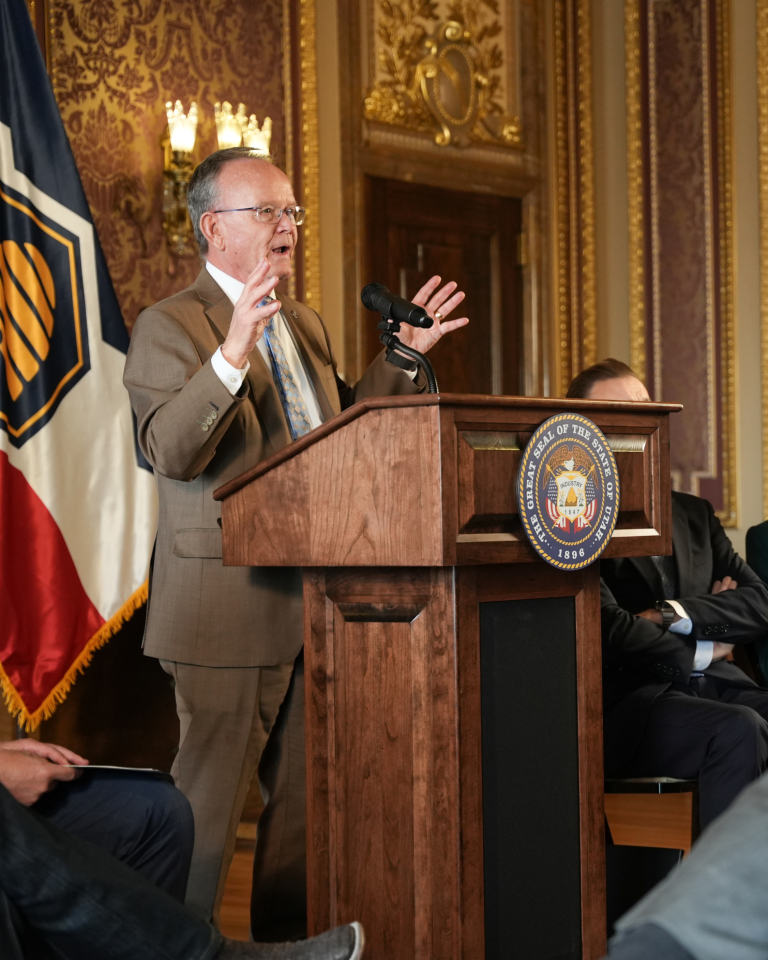
“At a time when universities in other states are increasingly consumed by social battles and political conflict, Utah has made a deliberate choice to lead differently,” House Speaker Mike Schultz said. “We have chosen collaboration over confrontation. We have chosen reform over rhetoric. And we have chosen to stay focused on what truly matters: delivering value and opportunity to students.”
How Does Utah Compare to the Rest of the Country on Affordability?
Since SB 146 reorganized the Utah Board of Higher Education in 2023, board members have been laser-focused on workforce outcomes and keeping student costs low. And that focus on affordability shows clearly in the data. Average tuition and fees at a Utah four-year public institution were $6,979 in 2024-25, nearly $3,000 below the national average. A WalletHub study found Utahns spend just 27% of their median annual household income on college costs, the lowest share of any state. Utah students also carry the country’s lowest average student loan debt.
And affordability has only gotten better over time. Utah held higher education tuition flat in 2024. Projected increases for 2025–2027 also remain at or below inflation. After adjusting for inflation, tuition and fees at almost every degree-granting institution have actually fallen over the last 10 years.
What Are the Real-World Returns on a Utah College Education?
A 2026 Kem C. Gardner Policy Institute policy brief documented the returns on postsecondary investment in Utah clearly. Typical Utah graduates earn 10% to 64% more in wages five years after completion compared to those who don’t complete a degree. The unemployment rate for Utahns with a bachelor’s degree or higher was just 2% in 2024, nearly half the rate for people with just a high school diploma. Under 4% of college graduates in Utah live below the poverty line, compared to 10% of those without a degree.
The benefits extend to the broader economy. Utah’s public higher education system directly employs about 73,000 Utahns, indirectly supports 65,000 more jobs, and contributes $14 billion in GDP to the state’s economy. More than 70,000 degrees and certificates were awarded in 2024–25, with over 76% aligned to high-demand occupations. Utahns with higher educational attainment rely less on public assistance while contributing substantially more to tax revenues over their working lives, the definition of taxpayer ROI.
“The thing we’re most focused on is making sure that Utahns see that there’s a high return on their investment from their education,” Commissioner Geoffrey Landward said,” giving you skills that help provide value in the workplace and significantly higher economic opportunities.”
What Does This Mean for Utah Students, Families, and Taxpayers?
Sustained legislative focus on higher ed has positioned Utah’s colleges and universities to be more accountable, more affordable, and more aligned with what students and employers need without asking Utahns to pay more.
“When we put student outcomes first, it’s good for families, communities, and the future of our state,” said Rep. Karen Peterson.
For students, the reforms mean more seats in high-demand programs and credentials that translate into strong jobs. For Utah’s workforce, they mean a pipeline of nurses, engineers, and skilled professionals ready to enter the state’s fastest-growing industries. For taxpayers, they mean public investments that are measured, evaluated, and held to a high standard.
The Utah House Majority committed to reforming and strengthening higher education as a priority. After four sessions of meaningful collaboration with university leaders, Utah has delivered on that commitment, making Utah’s higher education system more focused, more efficient, and more student-centered than ever before.
Frequently Asked Questions About Utah's Higher Education Reform
What is HB 265 and what did it actually cut?
HB 265, passed in 2025, required Utah’s eight public degree-granting institutions to reallocate $60 million from administrative costs and low-enrollment programs into high-demand areas.
Only a small number of programs were eliminated – at the University of Utah, none had graduated more than a single student in eight years. At Weber State, fewer than 1% of students were affected. All changes phase in over three years, giving current students in affected programs time to complete their degrees. And universities kept the funding, reinvesting it to expand high-impact, high-demand programs that deliver strong workforce outcomes for students.
How affordable is college in Utah compared to other states?
Average tuition and fees at a Utah four-year public institution were $6,979 in 2024–25, nearly $3,000 below the national average. Utahns spend just 27% of their median household income on college costs, the lowest share in the nation. Utah students also carry the country’s lowest average student loan debt. After adjusting for inflation, tuition and fees at almost every degree-granting institution have actually fallen over the last 10 years.
Is Utah's college enrollment growing or declining?
Right now, college enrollment in Utah continues to grow. Fall 2025 enrollment across Utah’s eight degree-granting public institutions exceeded 216,000 students, a 4.2% increase from the prior year, with seven institutions seeing gains. This stands in contrast to national trends, where enrollment has declined since 2010.
What is the return on investment for a Utah college degree?
Utah System of Higher Education graduates earn 10% to 64% more in wages five years after completion compared to non-completers. The unemployment rate for Utah college graduates is 2%, nearly half the rate for high school diploma holders. Under 4% of college graduates live below the poverty line, versus 10% of those without a degree. Utah’s public higher education system contributes $14 billion in GDP to the state’s economy.
Why do Utahns trust their higher education system more than most Americans?
A March 2026 Deseret News Hinckley Institute poll found 67% of Utahns have confidence in their state’s colleges and universities, well above the 42% national figure from a 2025 Gallup survey. Leaders attribute that trust to Utah’s record of keeping tuition low, limiting student debt, and staying focused on workforce outcomes and student success.
For more on the Utah House Majority’s 2026 session priorities, visit the House Majority website. To read the official bill text, visit le.utah.gov.