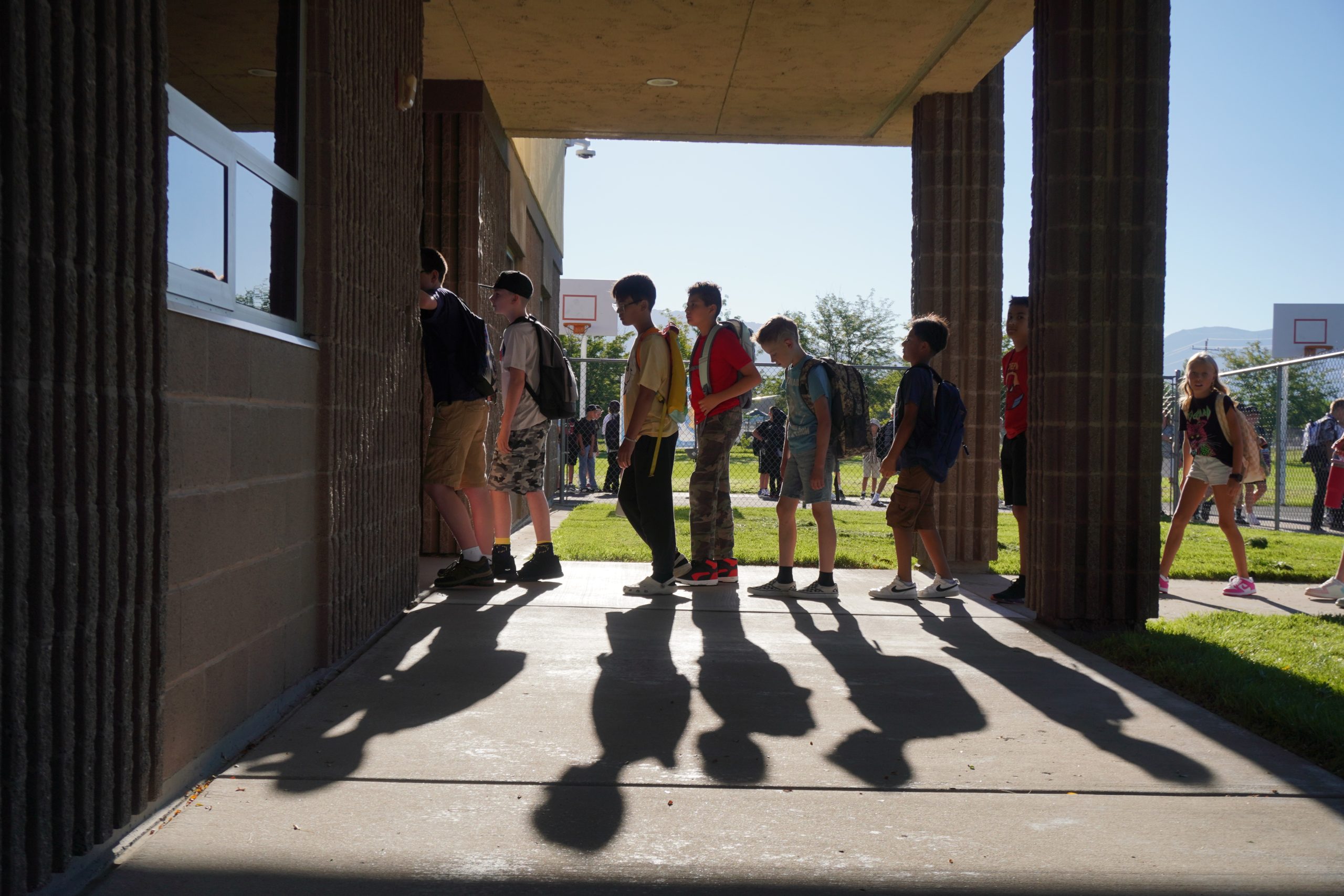
Public education is Utah’s largest state investment and one of the Legislature’s greatest priorities.
Strong schools prepare students for success, strengthen communities, and help power Utah’s economy.
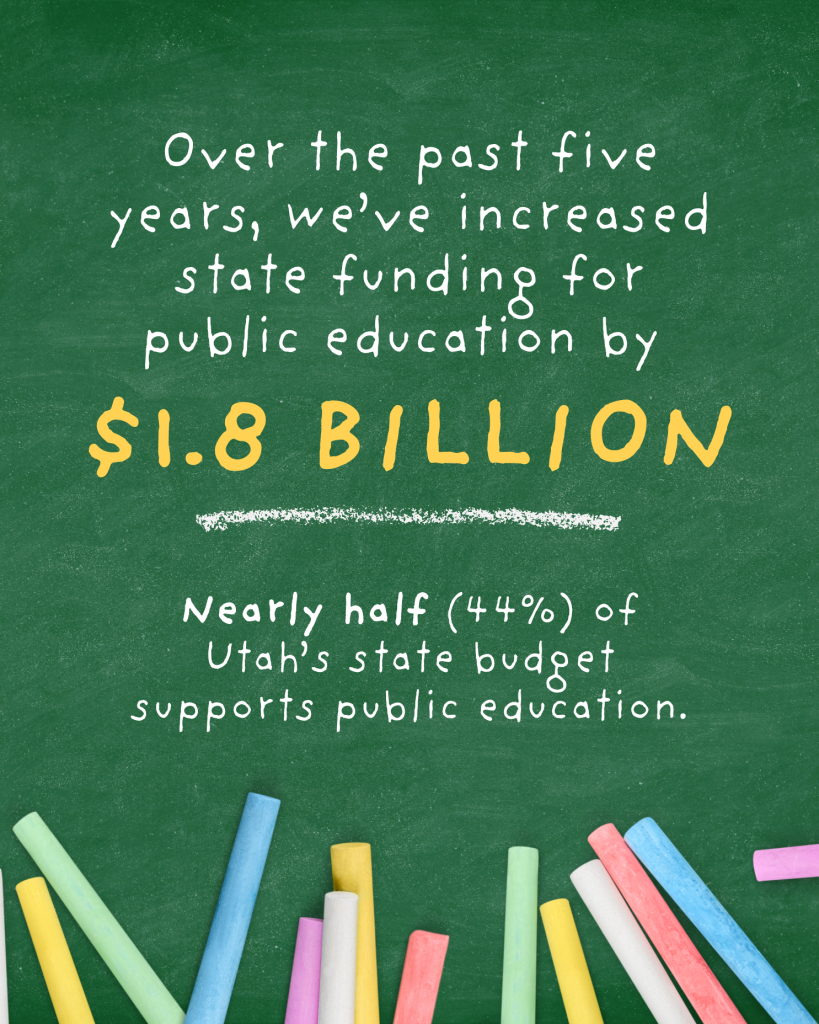
Over the past five years, the Legislature has increased state funding for public education by $1.8 billion, a 44.2% increase. Even in a year of slower economic growth, lawmakers approved a 4.2% increase in per-student funding, providing school districts with an additional $191.3 million to support teachers, classrooms, and students.
Today, nearly half (49%) of Utah’s $12.4 billion state budget supports public education. Those sustained investments helped Utah earn the No. 2 ranking for education in the 2024 U.S. News & World Report Best States rankings.
Education by the Numbers
- $1.8 billion increase in Utah public education funding over the past five years
- 44.2% increase in state public education funding
- 49% of Utah’s state budget supports public education
- No. 2 nationally for education in the 2024 U.S. News & World Report Best States rankings
How Utah Public School Funding Works
The foundation of Utah’s public education system is the Weighted Pupil Unit (WPU), the state’s primary funding mechanism for public schools.
Each year, lawmakers adjust the WPU to give school districts additional resources while allowing local leaders the flexibility to meet their communities’ needs. Those dollars support teacher compensation, classroom instruction, student services, and day-to-day school operations.
Since 2023, the Legislature has increased the WPU every year:
- 2023: 6%
- 2024: 5%
- 2025: 4%
- 2026: 4.2%
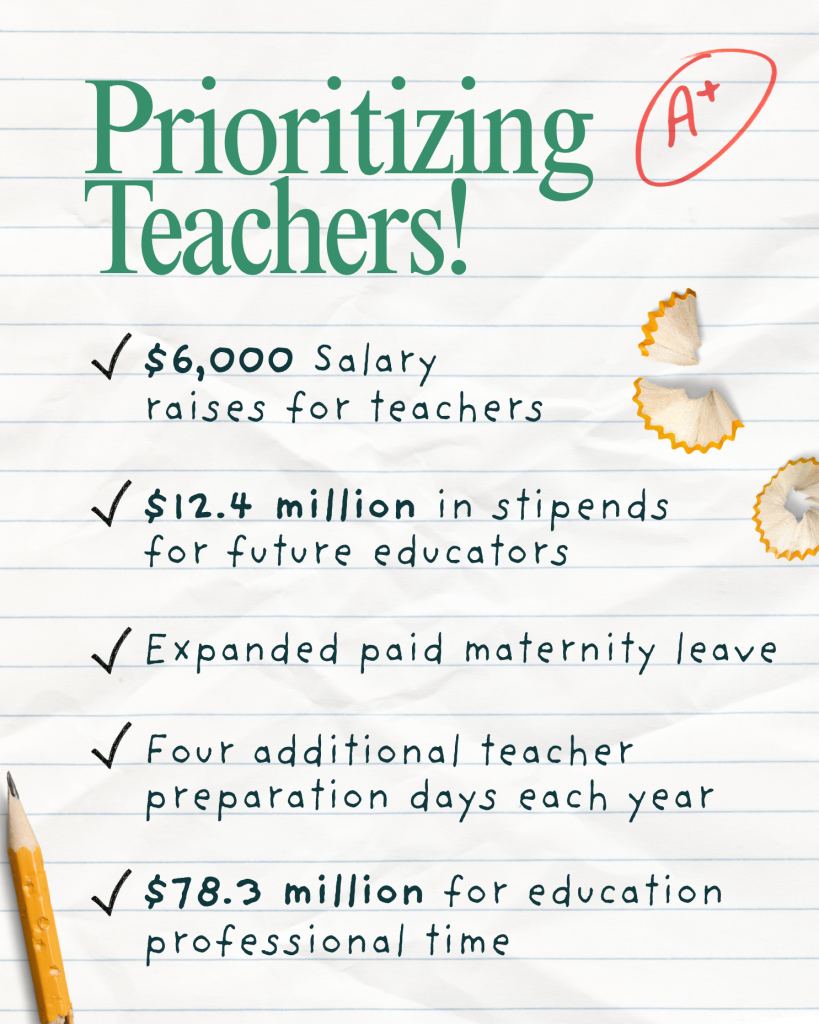
Beyond the WPU, lawmakers continue investing directly in classrooms. Teachers now receive up to $500 for classroom supplies through H.B. 105, sponsored by Rep. Kera Birkeland, helping offset the cost of instructional materials.
H.B. 396, sponsored by Rep. Jefferson Moss, also provides 32 hours of paid planning time, giving educators dedicated time for lesson planning, collaboration, and professional development before students return to the classroom.
Investing in Student Success and Educational Opportunities
Broad education funding gives every public school the resources to meet local needs. Targeted investments also expand opportunities for students with different interests, learning styles, and career goals.
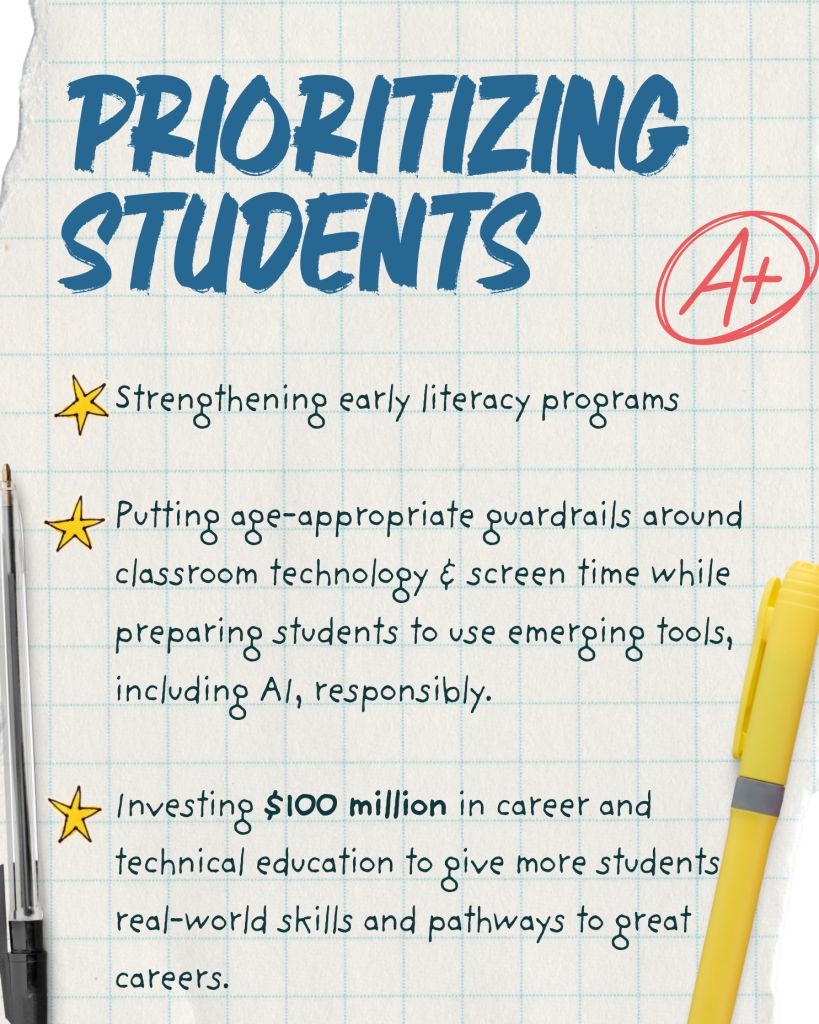
Utah students benefit from investments that support learning from the first day of kindergarten through graduation. H.B. 477, sponsored by Rep. Robert Spendlove, expanded access to optional full-day kindergarten, while S.B. 241, sponsored in the House by Rep. Karen Peterson, strengthened reading instruction and targeted interventions to help more students read proficiently by third grade.
Students with additional learning needs also receive greater support. H.B. 42, sponsored by Rep. Candice Pierucci, provides emergency funding for schools experiencing rapid growth in English learner enrollment while lawmakers appropriated $25 million in 2026 to continue phasing in the At-Risk Student Weighted Pupil Unit, giving schools more resources to support students who need them most.
Career readiness has also become a major focus. H.B. 163, Grow Your Own Educator Pipeline Program Amendments, sponsored by Rep. Ryan Wilcox, expands scholarship opportunities for future special education teachers. H.B. 260, First Credential Program, sponsored by Rep. Val Peterson, helps students earn industry-recognized credentials aligned with high-demand careers while the $100 million Statewide Catalyst Program sponsored by House Speaker Mike Schultz expands Career and Technical Education opportunities across Utah.
Families seeking additional educational options also gained new opportunities and choices. H.B. 215, sponsored by Rep. Candice Pierucci, created the Utah Fits All Scholarship Program, and H.B. 455 expanded the program as participation continued to grow.
“Every child learns differently, and supporting education means supporting the approach that helps each student succeed,” said Rep. Candice Pierucci. “The Utah Fits All Scholarship gives families another educational option while continuing our broader commitment to public education. Our goal is simple: ensure every student has the opportunity to learn, grow, and reach their full potential in the environment that best meets their individual needs.”
Together, these investments reflect a simple goal: giving every student access to the educational opportunities and support they need to succeed.
Increasing Utah Teacher Pay and Supporting School Staff
Utah lawmakers have increased teacher pay while expanding leadership opportunities and professional support to strengthen teacher recruitment and retention.
Higher pay, stronger leadership opportunities, and expanded professional support have strengthened teacher recruitment and retention across Utah.
In 2023, H.B. 215, sponsored by Rep. Candice Pierucci, provided a $6,000 direct salary increase for teachers, the largest educator compensation investment in Utah history. S.B. 183, sponsored in the House by Rep. Steven Lund, tied future educator salary adjustments to annual WPU increases, helping ensure teacher pay continues to grow alongside education funding.
“To our teachers and education support professionals: We see the dedication, passion, and sacrifice you pour into your classrooms, and we want to say, ‘Thank you,’” House Speaker Mike Schultz said. “We’re working hard to support you and give you the resources you need to succeed.”
S.B. 173, sponsored in the House by Rep. Karen Peterson, invested $150 million in teacher salary supplement opportunities. H.B. 431, sponsored by Rep. Candice Pierucci, created new teacher leadership opportunities, strengthened mentoring programs, and established postpartum recovery leave to improve teacher recruitment and retention.
Future educators also receive greater support. H.B. 221 and H.B. 204, both sponsored by Rep. Karen Peterson, created and expanded student teacher stipends, reducing financial barriers while future educators complete their classroom training.
Education support professionals also received new investments. In 2025, lawmakers approved a $1,000 bonus for paraprofessionals, bus drivers, custodians, food service employees, library staff, and other support personnel who keep schools running every day.
Most recently, S.B. 62, sponsored in the House by Rep. Matt McPherson, directed additional education funding toward classroom teachers, instructional aides, and paraprofessionals who work directly with students.
Building the Future of Utah Education
Education remains Utah’s largest budget priority and one of Utah’s most important long-term investments.
Higher teacher pay, stronger classroom funding, expanded educational opportunities, and targeted investments for students with unique needs continue strengthening one of the nation’s highest-performing public education systems.
As Utah grows, lawmakers will continue investing in teachers, strengthening classrooms, and expanding opportunities for every student to succeed.
Frequently Asked Questions About Utah Public Education Funding
How much has Utah increased public education funding?
Over the past five years, the Legislature has increased state funding for public education by $1.8 billion, or 44.2%. Today, public education accounts for nearly half of Utah’s $12.4 billion state budget.
How is increased funding reaching the classroom?
In addition to annual increases in per-student funding, lawmakers have invested directly in teachers and classrooms. Teachers receive up to $500 for classroom supplies and 32 hours of paid planning time, while targeted funding supports literacy, at-risk students, and career and technical education.
What has the Legislature done to increase teacher pay?
In 2023, lawmakers approved a $6,000 direct salary increase for teachers and tied future salary adjustments to annual increases in per-student funding. The Legislature has also invested $150 million in additional teacher salary opportunities and expanded mentoring and leadership programs.
How does Utah Fits All fit into Utah’s education funding strategy?
Utah Fits All is part of Utah’s broader commitment to ensuring every student has access to an education that meets their needs. The program expands options for families while lawmakers continue investing in strong public schools, including increased per-student funding, teacher pay, classrooms, and student programs.