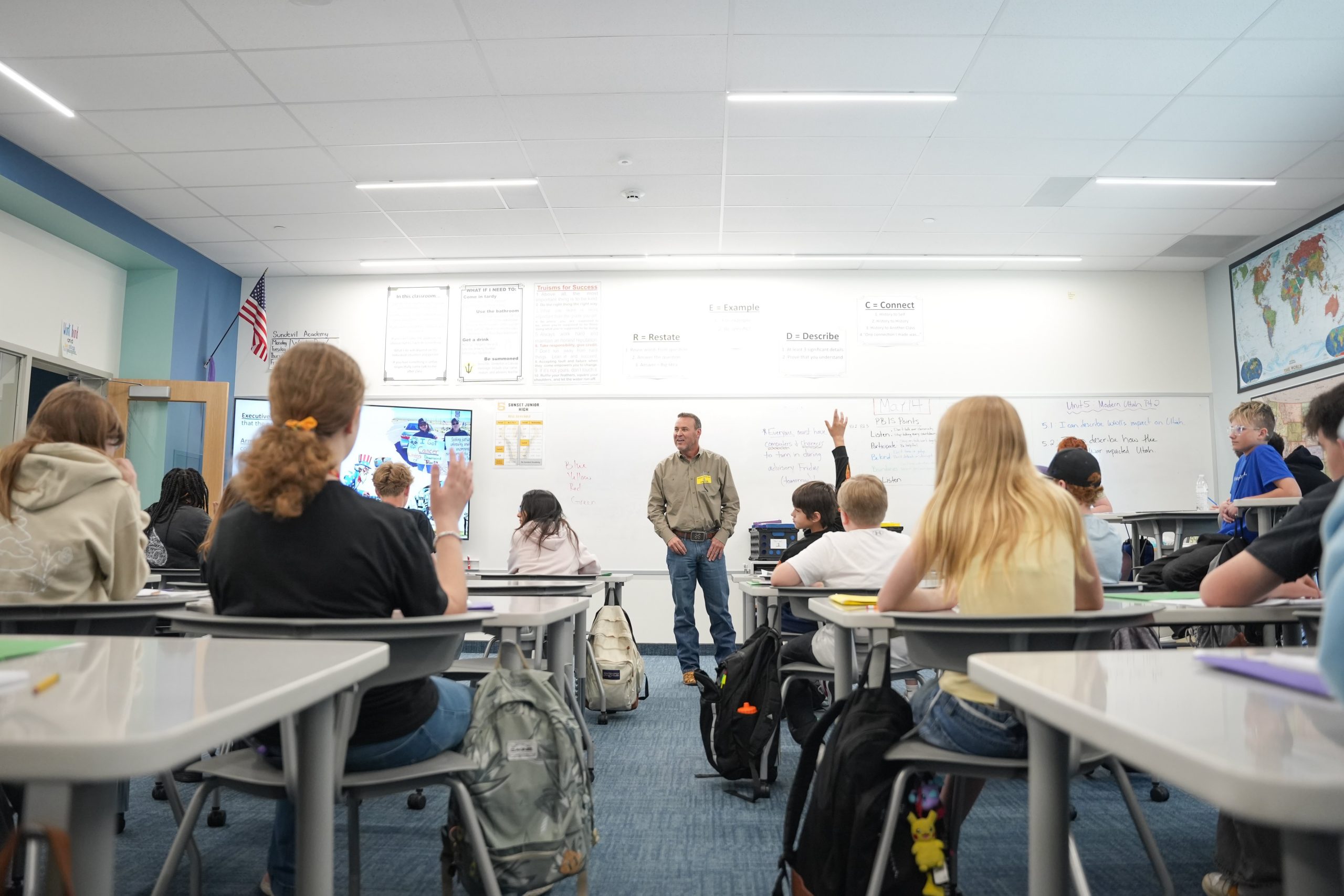
Supporting education means more than funding schools. It also means creating classrooms where students can focus, teachers have the tools to succeed, and families have confidence their children are receiving a high-quality education.
Over the past several years, the Legislature has paired record investments in public education with policies designed to improve classroom instruction, strengthen literacy, reduce distractions, expand parent involvement, and better prepare students for college, careers, and life.
Together, these efforts reflect a simple goal: helping every Utah student reach their full potential.
School Mental Health Support and Reducing Student Fees
Students learn best in schools that are safe, supportive, and accessible.
H.B. 411, Student Behavioral Health Services Amendments, sponsored by Rep. Karen Peterson, strengthened school-based mental health support by expanding the role of qualified support personnel and helping schools better coordinate behavioral health services.
Families also benefit from lower education costs. H.B. 415 and H.B. 344, School Fees Amendments, sponsored by Rep. Mark Strong, eliminated or reduced fees for many required secondary school courses, helping ensure students can fully participate regardless of financial circumstances.
Increasing Parent Involvement in Utah Schools
Parents remain a child’s first and most important teachers.
H.B. 249, Education Related Amendments, sponsored by Rep. Karen Peterson, strengthened parent access to student records while also creating an online parent portal with school performance data, resources, and comparison tools in one place.
These improvements help families stay informed, stay engaged, and work more closely with teachers to support student success.
Improving Early Literacy and Reading in Utah Schools
Reading is one of the strongest predictors of long-term academic success, making early literacy one of Utah’s highest education priorities.
S.B. 127, Early Literacy Outcomes Improvement, sponsored in the House by Rep. Bradley Last, launched Utah’s Science of Reading initiative by establishing statewide literacy coaching, educator training, evidence-based instructional practices, and classroom resources based on how children learn to read.
Building on that foundation, S.B. 241, Early Literacy, sponsored in the House by Rep. Karen Peterson, strengthens reading interventions for struggling students, expands Science of Reading training, and establishes an ambitious statewide goal: 80% of Utah students reading on grade level by the end of third grade by 2030.
Dyslexia Screening and Early Reading Intervention
Students learn best when schools identify reading challenges early and provide support before they fall behind.
H.B. 296, Reading Disability Amendments, sponsored by Rep. Susan Pulsipher, strengthened Utah’s reading assessments by requiring schools to identify characteristics of dyslexia during existing literacy screenings and respond with appropriate interventions.
Building on that work, H.B. 393, Early Intervention for Dyslexia Amendments, sponsored by Rep. Ariel Defay, created Utah’s Dyslexia Screening Pilot Program in partnership with the University of Utah. S.B. 81, Dyslexia Testing Amendments, sponsored in the House by Rep. Ariel Defay, requires schools to respond when assessments identify characteristics of dyslexia, reading delays, or a lack of reading competency.
Together, these reforms help schools identify struggling readers earlier and connect students with the support they need to succeed.
College and Career Readiness for Utah Students
Education should prepare students for success long after graduation.
H.B. 502, School Attendance Modifications, sponsored by Rep. Doug Welton, encourages responsibility by standardizing citizenship grades, allowing attendance to count toward course credit, and creating a scholarship pathway that recognizes strong citizenship.
Students also have more opportunities to prepare for high-demand careers through Career and Technical Education programs, industry-recognized workforce credentials, and other workforce readiness initiatives supported by the Legislature.
Strengthening Utah Public Education
Utah’s education strategy pairs strong financial support with high expectations for student achievement.
From improving literacy and identifying reading challenges earlier to strengthening parent partnerships, reducing classroom distractions, and preparing students for future careers, these reforms work together to create classrooms where students can learn, teachers can teach, and families can have confidence in their children’s education.
As Utah continues to grow, lawmakers remain committed to supporting policies that strengthen classrooms, improve student outcomes, and keep Utah among the nation’s top-performing education systems.
Frequently Asked Questions About Education Policy in Utah
What is Utah doing to improve reading outcomes?
Utah has made early literacy a statewide priority through the Science of Reading, giving teachers evidence-based training, coaching, and classroom resources. The state has set a goal of 80% of students reading on grade level by the end of third grade by 2030.
Are cell phones allowed in Utah schools?
Utah’s statewide default is a bell-to-bell restriction on student use of cell phones and other personal devices. Schools retain flexibility to adopt policies that meet local needs, with exceptions for emergencies, medical needs, and student safety.
How is Utah approaching technology and AI in the classroom?
Utah is working to balance the benefits of technology with the importance of limiting unnecessary screen time. State policy places stronger screen-time limits on younger students while allowing greater technology use as students advance and encouraging responsible use of emerging tools such as AI.
How are parents being given a greater role in their children’s education?
Recent reforms strengthened parents’ access to student records and created an online portal where families can find school performance information, resources, and comparison tools. The goal is to give parents better information and make it easier to work with teachers and schools to support their children.